


What is a Dermatomycosis?
Under the term of Dermatomycosis are all fungal infection of the skin summarized.
For the foot, “tinea pedis” or “athlete’s foot” is the most common infection caused by dermatophyte fungi. Contagion occurs typically when walking barefoot in damp areas.
How do I know if I have athlete’s foot?
There are a number of signs and symptoms, easy observable, that make us suspect of the presence of fungal infection in the foot:
- Bad smell
- Burning or intense itching
- Small blisters, cracks or peeling skin between the toes, most often in the space between 4th and 5th toe
- Sole desquamation, entire or in the medial arch area
Diagnosis of “athlete’s foot” is confirmed with the Wood’s lamp exam. The fungus produces a change in the ultraviolet light emitted from the lamp. This change is analysed visually.
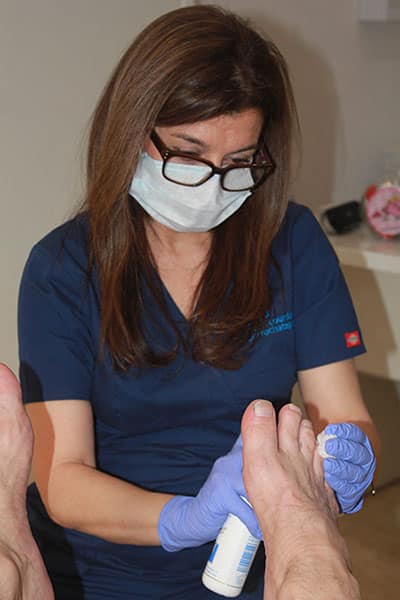
Treatment of the Athlete’s Foot
A number of hygienic measures and the application of a local topical antifungal treatment by a lotion, cream or powder will be combined. The choice of the treatment depends on the extent of the injuries and its presentation.
As in nail fungus, hygienic measures are important to cure the athlete’s foot:
- Treatment of the footwear with antifungal agents (powder or spray)
- Change the footwear daily
- Daily change of socks. Preferably use socks made of natural fibre
- Use soap with an acid pH value and with an antimicrobial component for daily hygiene
- Use a towel exclusively for the affected foot
- Conduct a thorough drying of the entire foot, especially the spaces between the toes
- Control excess sweating by using antiperspirant products